
Waldorf Previous Resident Sources
Different records answer different parts of a house history. Start with the property record. It supplies the parcel, the legal description, and a deed reference. Those three details hold the trail together. Recorded instruments, directories, newspapers, and archives then carry the story back in time. Waldorf sits in Charles County rather than an incorporated city, so no separate local records office exists. The usual routes run through Charles County, the Maryland State Archives, libraries, and historical societies. A dated association and proof of a full household are different things. Keeping that distinction clear prevents most dead ends.
| Source | Years It Covers | Where Held | What It Shows |
|---|---|---|---|
| SDAT and current deed reference | Current informational record | Maryland SDAT and Charles County parcel workflow | Parcel account, assessment, sale, and deed/plat reference. |
| Recorded land instruments | Varies by Charles County index and record series | MDLandRec, Circuit Court Clerk, Archives | Grantors, grantees, record dates, legal descriptions, book/page references. |
| Charles County telephone directories | 1933-42 through 1966-67 runs in LOC metadata | Library of Congress digitized microfilm collection | Dated telephone subscriber, address, exchange, or business clues. |
| Old or cancelled voter cards | 1896-1979 | Maryland State Archives T1220 | Name, address, district, party, and voting-history clues under archival rules. |
| Historic Sites File and local history | Collection-specific | Charles County Historical Society, CCPL, SMSC | House names, maps, articles, photographs, and local context. |
The parcel layer and the document layer do not say the same thing. A present-owner display can lag behind a recorded instrument. An old directory line may only describe a telephone subscriber rather than everyone in the home. Treat each source as evidence of its own kind. Note: Keep a source date beside every name. Keep a source role beside it too in a house-history note.
Waldorf Previous Residents Start With Parcels
Fix the modern location before touching any name search. The SDAT Real Property Data Search accepts Charles County combined with an address, street name, account identifier, or map reference. Its instructions do not allow searches by owner name, town, neighborhood, subdivision, or ZIP. Pair the SDAT result with the Charles County GIS Interactive Map so the address spelling, subdivision, tax map, grid, parcel, and surrounding context stay recorded.
The two systems play different roles. GIS shows parcel geometry; SDAT carries the assessment and the deed reference. For a Charles County parcel, the GIS ACCTID runs 10 digits and begins with 09. A changed street number, rural route, P.O. box, or mailing city should not derail the work when the parcel and legal description still match. The legal description is the land identifier copied into an instrument. It usually outlasts any informal address.
Tracing Waldorf Previous Residents Through Deeds
Deeds record ownership and transaction roles, not residence. MDLandRec offers no address search for Charles County, so begin at SDAT and carry the book/page or party clue into the land-record index. A grantor transfers an interest. A grantee receives one. The chain of title is the sequence of instruments connecting a parcel to earlier owners, and each link matters. Note the instrument type and date before claiming anything about the property's history.
- Search the present address in SDAT and save the account/PAN, deed reference, and legal description needed for the next step.
- Select Charles County in MDLandRec and use the book/page Jump when the SDAT reference provides it, or search the current party by name.
- Read the latest deed’s grantee and the prior deed’s grantor, then capture record date, book/page or document number, and legal-description wording.
- Search the earlier party in the opposite role to locate the preceding purchase or transfer. Use Fuzzy or Soundex where a historic name has a variant.
- For a pre-index or missing online link, ask the Charles County Clerk, Archives, or reference staff which book, microfilm, or guide series holds the next record.
The MDLandrec guidance walks through the SDAT-to-land-record path and explains the address-search limit. Need help in person? The county land-record counter sits with the Clerk of the Circuit Court at 200 Charles Street in La Plata. The counter route also works when an online index or image leaves a question open. Bring the book and page reference.
- Grantor
- The party recorded as transferring an interest in a deed or other instrument.
- Grantee
- The party recorded as receiving an interest. This is not automatically a current resident.
- Chain of title
- A backward sequence of recorded instruments tied to the same land or legal description.
- Legal description
- The plat, lot, metes-and-bounds, or other land wording that helps reconcile an old record with a modern address.
Waldorf Previous Residents and Image Access
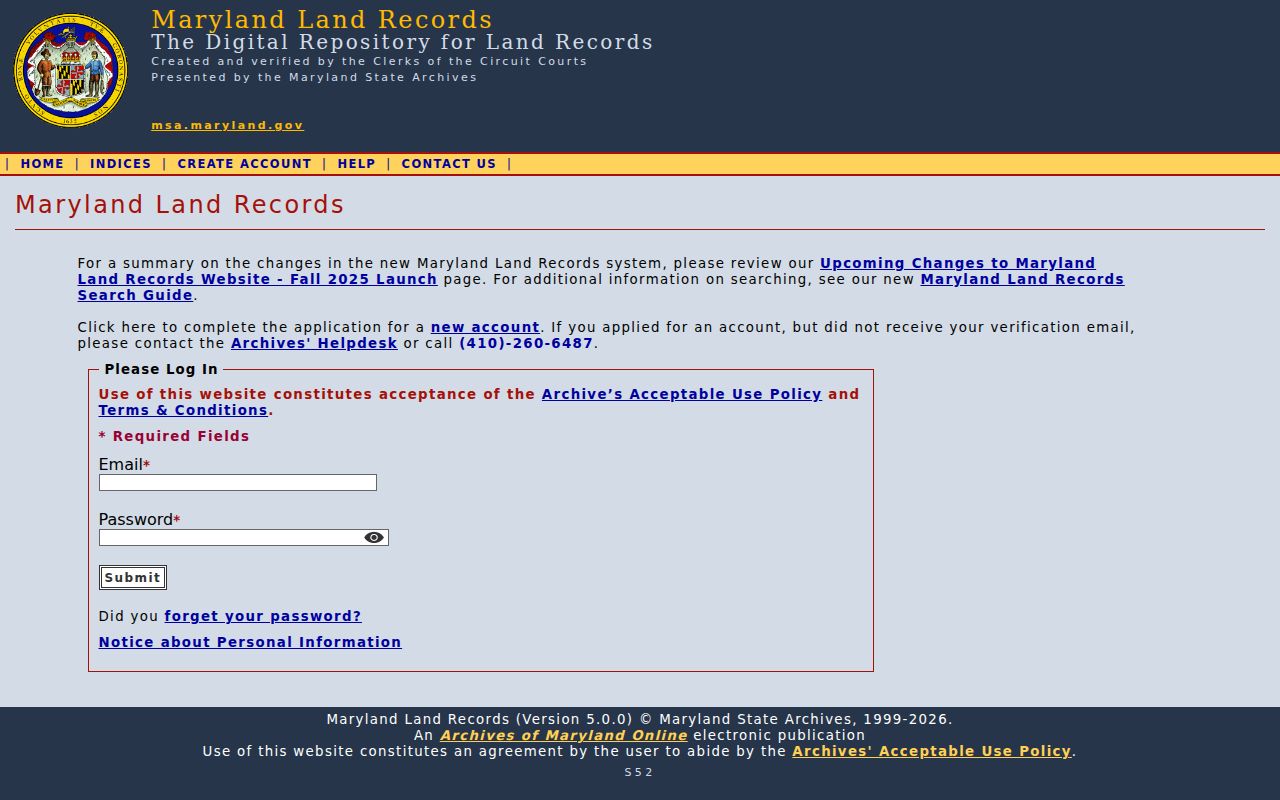
Index access and image access are separate gates. MDLandRec searching covers recorded parties, dates, book/page references, and instrument clues. Remote images require a free account. That account needs email verification and MFA. Public workstations at the courthouse and the Maryland State Archives offer another image route. Maryland Judiciary guidance lists a plain-copy fee of $0.50 per page. Skip copying personal numbers that a land-record image happens to show.
The MDLandRec login route is the access point for remote images. An index hit is only a lead to the instrument. The image itself, the counter, or a workstation confirms what the document actually says.
Use a narrow record request when a document or administrative file is not online. The Maryland Public Information Act can serve as a fallback for county material. It cannot override court restrictions, voter confidentiality, or statutory redactions.
Waldorf Previous Residents and Permit Dates
Permit records date a structure, an alteration, a development phase, or a Certificate of Use/Occupancy. They cannot establish who lived at an address. Charles County points the public to Citizen Self Service Search Public Records. That portal covers construction drawings, issued permits, and Certificates of Use/Occupancy. The county's directions say to search a permit address with just the street number and name. Leave off the suffix, city, and ZIP. When CSS does not expose a nonconfidential record, ask Planning and Growth Management or file a focused PIA request.
The same development sources can explain a subdivision, road, stormwater feature, or common area named in a deed or plat. A recorded declaration of covenants, conditions, and restrictions is another document lead. It is not an occupant list. Note: Treat a permit date as evidence of a property event, never a household event.
Waldorf Previous Residents in Directories
Once a deed chain surfaces an older party or locality, directories and newspapers add the household layer. The Library of Congress Maryland collection holds 381 digitized images from microfilm and lists Charles County White/Yellow Pages runs from the 1930s through the 1960s. Search broadly. Try Waldorf, Beantown, St. Charles, rural routes, and post-office labels. Record the directory year, reel, page, entry type, phone or exchange, and the exact printed address with every hit.
- Choose a directory year near the recording date or property event and search surname, initials, spouse name, locality variants, and address.
- Pair the dated entry with Census, newspaper notices, probate, cemetery, or church sources rather than treating a disappearance as a move or death.
- Compare the address against the legal description or parcel when an old street form has changed.
- Label the outcome as subscriber, recorded party, voter, or historical household clue.
The historical volumes and their access limits are covered on the Waldorf city directory page. Charles County Public Library and the Southern Maryland Studies Center open additional paths. HeritageQuest, NewspaperArchive, Southern Maryland publications, and onsite finding aids all extend the search.
Waldorf Previous Residents in House Files
Old Waldorf properties often carry house or land names rather than modern street numbers, so those trace better by name. The Charles County Historical Society keeps 173 county folders in its Historic Sites File. They are arranged alphabetically. Each folder includes a county map locating its subject. Research, photographs, newspaper articles, and historical context may sit inside as well. The file fits best when a parcel carries an old house name or a location clue that predates stable address numbering.
Treat the Historic Sites File as a collection-level lead rather than a complete person index. Its source view identifies the house and the site research collection. Ask the Society for a house-name search. Match any hit against the deed chain first. Only then tie it to a Waldorf address.
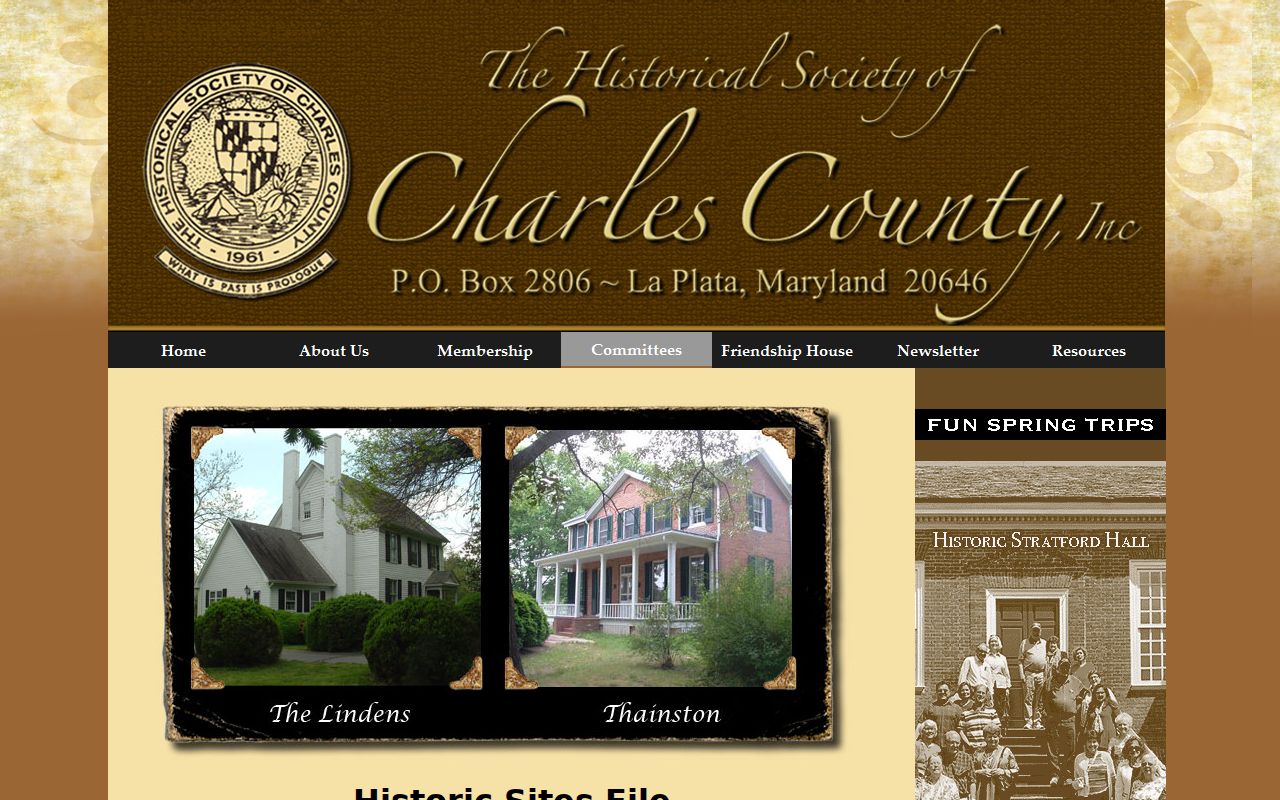
The Society also reports more than 300 surname and research folders. Its genealogy collection moved to the Southern Maryland Studies Center in 1976. Old locality terms stump a broad internet name search. Library and archival staff can often outperform it.
Waldorf Previous Residents in Voter Cards
Series T1220 at the Maryland State Archives preserves old and cancelled voter registrations from 1896 to 1979. A card can carry name, address, district, party, birth date, and birthplace. Voting-history clues can appear too. The series runs alphabetically. Books before 1959 sit by district and name. Archivists note it is not fully processed.
Plan with the T1220 Archives guide first. Charles County historical series, directories, cemetery material, and newspapers can corroborate a dated card. This is an archival trail for a historical question, not a web roster, and a voter registration records one role, just as a deed party and a subscriber are different roles.
Waldorf Previous Residents and Fire Gaps
A missing online record proves nothing. Former Waldorf households and land transactions still happened. Charles County's custody history explains the gaps, starting with a 1746 fire at clerk Edmund Porteus's home. The Port Tobacco courthouse burned on August 3, 1892. Records were removed unevenly during that fire.
Some bound court records from 1662-1786 and deed extracts from 1785-1803 had already been preserved in Annapolis, and Liber A records reached the Maryland Historical Society in 1886. When a trail hits a gap, keep going. Search the Maryland State Archives guide, microfilm, and reference service before drawing a conclusion.
Keep place terms as you find them. Beantown, Port Tobacco, La Plata, Waldorf, rural-route, and post-office wording all belong in the search. Note: A place-name variant can be the bridge to a surviving record in a different custody series.
Waldorf Past Households by Role
Past residents research works best when each source keeps its role. A deed establishes a recorded transaction. An assessor record supplies an owner and parcel context. A directory offers a dated subscriber clue. A historic-site folder suggests a house name or local context. Census, newspaper, probate, church, cemetery, and archival material can corroborate an association, but none of it supports a present-day claim about a living person.
Maryland Criminal Law §3-802 addresses stalking. §3-803 addresses harassment. Stop once the historic question is answered, leave protected information protected, and use the Clerk, Archives, library, or a narrow PIA request where the correct source is not online.